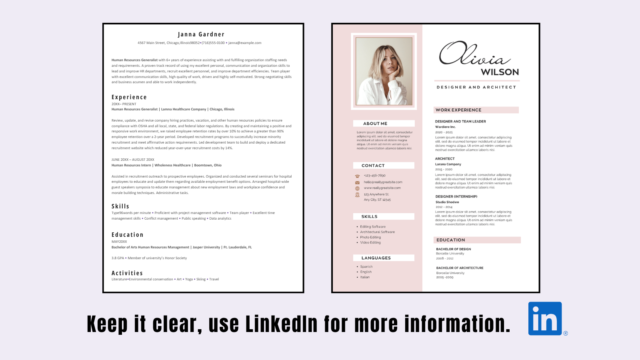
What should a professional resume look like?
08.12.2026 | Blog
Hi, I’m Lily, the new HR consultants & Sales Marketing Specialist at Bond Consultants. After recently graduating from graduate school and beginning my career in HR, I've gained valuable insights into the hiring process and career development. I'd like to share some of the things I've learned with you all.
What I thought when I was a student.
As an Integrated Marketing Communications student, my resume used to be very creative. I had my own logo, a unique layout, and a design that reflected my personal brand.
When I visited the career center on campus for resume advice, they told me that a resume should be simple and kept to one page.
Changing the design wasn't too difficult, but fitting everything onto a single page was really difficult. I wanted to show all my experiences, projects, and achievements. At the time, I felt that the more information I included, the stronger my resume would be.
One thing I've learned since starting my career in HR is that recruiters often begin by searching for specific keywords before they look closely at a candidate's experience.
Because we review so many resumes throughout the day, it's common to scan for relevant skills, qualifications, and keywords first. In many cases, we don't have time to read every single detail of a candidate's work history during the general screening.
I've also noticed that there are times when a resume doesn't provide enough information, and we turn to LinkedIn to learn more about a candidate's background. That's why it may be a good idea to include more detailed descriptions of your experiences, projects, and accomplishments on your LinkedIn profile.
Another reason is readability. When a one-page resume is packed with too much text, it can become difficult to read, and the most important information may get lost. A clear, concise resume combined with a well-developed LinkedIn profile can often be much more effective than trying to fit everything onto a single page.
My advice to students and job seekers:
If you're applying for marketing, design, or other creative roles, don't be afraid to submit a resume that shows your creativity and personal brand. A well-designed resume can help demonstrate your skills and make a strong first impression.
However, if you're applying for entry-level positions, internships, or opportunities in a new field where you're looking to gain experience, I would recommend using a simple, professional resume, similar to the formats recommended by university career centers.
From what I've seen in HR, a clean and easy-to-read resume is often more effective because recruiters review a large number of applications every day. The easier it is to identify your qualifications and relevant keywords, the more likely your resume is to catch a recruiter's attention.
Your resume doesn't need to tell your entire story. Let it highlight your most relevant experiences and use your LinkedIn profile to provide additional details about your background, projects, and accomplishments.
Sometimes, less is more. A clear, professional resume can open the door, and LinkedIn can help tell the rest of your story.